About Terma Heritage Foundation
A New York not-for-profit devoted entirely to the preservation of Tibetan language and culture — incorporated in 2026 to give a permanent home to work that began more than a decade earlier.
Terma Heritage Foundation continues and expands more than a decade of Tibetan cultural-preservation work led by its founder, Thupten Chakrishar — much of it carried out independently and supported by the Shelley & Donald Rubin Foundation, the Tsadra Foundation, and The Tibet Fund. That work now continues under the Foundation.
Origin
An accumulation of absences
There was no single moment. There was a slow accumulation of absences.
A father looking for Tibetan cartoons to show his children finds none. He looks for a Tibetan font a child would find friendly — something with the warmth of a picture book — and finds only the serious, formal typefaces of scripture and state. He looks for learning resources and finds many locked inside walled platforms, inaccessible even to the Tibetans who contributed them. And through a decade of work with the Himalayan Elders Project — the largest organization in North America serving Himalayan diaspora seniors — he watches elders die, and watches their folk songs, their geography, their living memory of Tibet disappear with them. Not metaphorically. He is an eyewitness. Some of those voices were recorded in time. Most were not.
For more than ten years, our founder — joined along the way by a dedicated circle of volunteers, artists, and scholars — answered these absences one project at a time: songs for children, restored recordings of masters, tools for writing and learning the language. But work carried by individuals, however devoted, is fragile. The Terma Heritage Foundation was incorporated in 2026 to give that work a permanent home — an institution that can seek support, sustain the tools, and carry the work long after any one of us is gone.
Most Tibetan nonprofits work in charity and social welfare, and that work matters. Very few are devoted entirely to the preservation of the language and culture itself. That is the whole of our mandate.
Why we are called Terma
In the Tibetan tradition, a terma (གཏེར་མ) is a treasure concealed in a time of danger, entrusted to the future, and revealed when the world is ready. We took the word as our name because it is our method: recover what is endangered, place it in a better vault than history provided — open, durable, legible — and put it directly into the hands of the next generation.
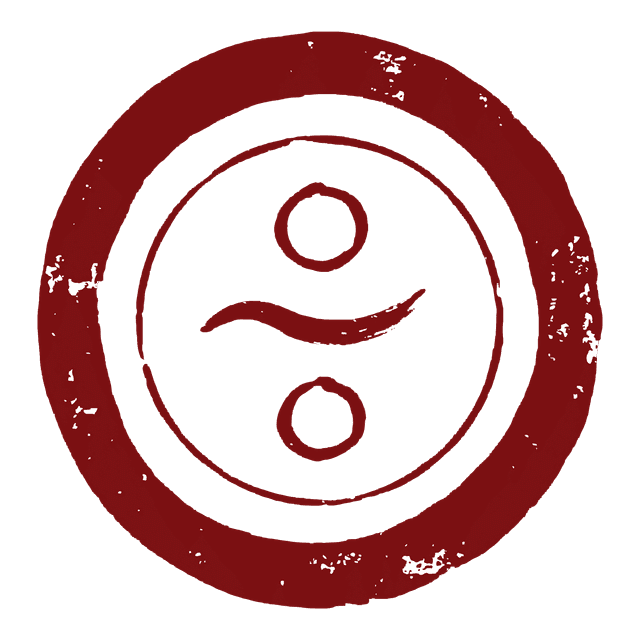
Our logo carries the Tibetan terma mark (གཏེར་ཚེག) — the scribal sign that, for a thousand years, has identified something as treasure. Terma include not only texts but sacred objects, images, medicines, melodies, sacred dances, hidden landscapes, and revealed transmissions of insight itself. Two rings frame this mark:
- The outer ring is preservation — the structural commitment to safeguard what exists.
- The inner ring is transmission — the living current that carries meaning forward across generations.
Between them lives the treasure itself: source above, transmission between, reception below.
The Problem
What is actually happening
The language is losing a generation per generation
Today the picture looks tolerable only because the elders are still alive. In twenty years they will be gone. The generation now in middle age largely speaks Tibetan but cannot write it; their children often cannot speak it properly. Each cohort is measurably less literate in Tibetan than the one before. Inside Tibet, the Chinese state works actively to suppress the language, including through a boarding-school system that separates an estimated one million Tibetan children from daily life in their mother tongue. In exile we are free — and freedom alone has not been enough, because the tools that make a language livable in the digital age were never built for Tibetan.
The songs are leaving with the singers
Folk songs, regional styles, and oral histories exist in the memories of specific, aging people. There have been scattered preservation efforts by Western organizations, but no central, open repository. When an elder who carries a song dies unrecorded, that song has no second chance.
The tools gap is the transmission gap
A child spends their day inside technology. If nothing in that world speaks Tibetan — no fonts made for children, no games, no cartoons, no word processor that makes writing effortless — then the language becomes homework, and homework loses to everything else. Preservation organizations doing important physical-world work stand on one side of this divide; the children are on the other. Someone has to build on the children's side.
In thirty years, if no one does this work, the political cause of Tibet may well survive. The thing it exists to protect — the language, the culture, what makes a Tibetan a Tibetan — will not.
The Vision
What success looks like
A Tibetan child in Queens or Kathmandu opens a book set in a typeface designed to delight her — one of dozens of Tibetan fonts used by publishers, cartoonists, and content creators who have made the script fashionable, the way Japan, Korea, and China made theirs. She watches animations in Tibetan, plays games in Tibetan, messages her grandmother in Tibetan. When she writes, a word processor completes her spelling, offers definitions, and translates — so writing in Tibetan is not harder than writing in English.
If she wants to learn the dranyen, a master is teaching a student somewhere in her community, and every tool to tune it, play it, and study it is free on her phone. If she becomes a scholar, a vast open repository of folk songs, oral histories, and digitized texts is waiting for her research. If her grandmother wants to record her story, she can do it easily, and it will be kept.
Everything a language and culture need to live in the digital age — available, open, free — and still passing, hand to hand, from the people who carry it.
Our mission
To preserve, promote, and advance Tibetan and Himalayan cultural heritage — including language preservation and revitalization — through technology, education, the arts, and community programs.
Within that mission, the Foundation has chosen a deliberate, decade-long focus on three commitments: make reading and writing Tibetan beautiful and effortless; make children want the language; and keep the living lineages alive through apprenticeship.
See the three commitmentsLegal & entity information
- Legal name
- Terma Heritage Foundation, Inc.
- Entity type
- New York Not-for-Profit Corporation
- Tax status
- 501(c)(3) public charity
- EIN
- 41-5173191
- Orientation
- Non-sectarian (rimé) — serving all Tibetan traditions and communities.
Partner With Us
This body of work was built with almost no institutional funding. Terma Heritage Foundation welcomes partnerships with foundations, cultural institutions, universities, and government agencies committed to cultural preservation.