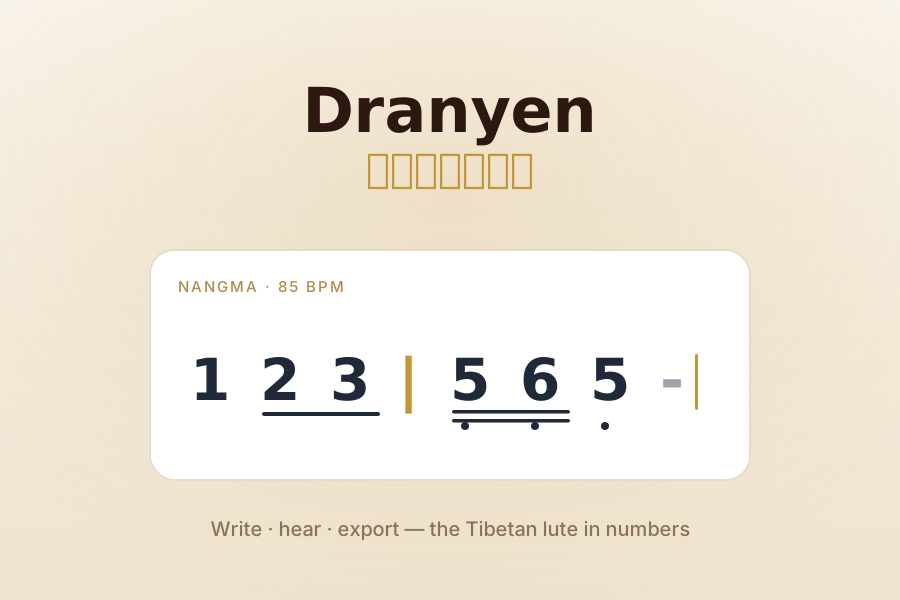
How dranyen music is written
Numbers, not staves
Tibetan lute melodies are traditionally passed down by ear, but when they are written, they use a numbered notation: the digits 1–7 stand for the seven scale degrees — Do, Re, Mi, Fa, So, La, Ti — with underlines for shorter notes, a dash to hold, and a dot beneath the re-entrant low notes. It is the same shorthand a master player jots in the margin of a songbook.
This little editor lets you write in exactly that language, hear it on a real dranyen, and carry the result out as sheet music a cellist could read — so a melody once kept only in memory can be saved, shared, and played again.
Real dranyen sound
Every note plays a sample recorded by master musician Tenzin Norbu — no synthesised tones.
Sheet music, live
The numbers become standard staff notation as you type, and export to PDF, MusicXML, or MIDI.
Save & share
Every tune lives in a link — send it to a friend and they open your exact composition.
Created by Thupten Chakrishar•Sound samples by Tenzin Norbu (Tenor)