Why these symbols?
Matching jewels, gathering blessings
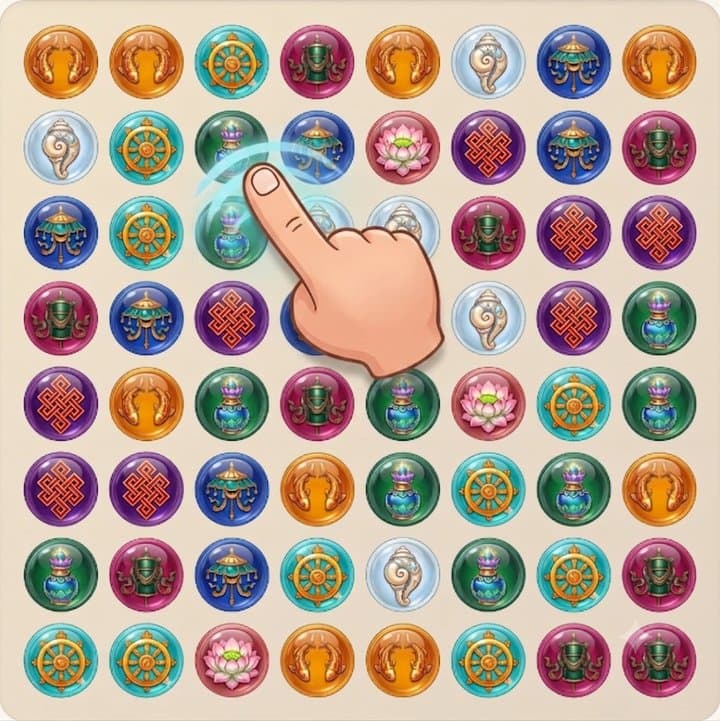
Norbu (ནོར་བུ་) means “jewel.” The gems you slide across the board are the Eight Auspicious Symbols — Tashi Tak Gyé (བཀྲ་ཤིས་རྟགས་བརྒྱད་), the Ashtamangala — the most beloved cluster of good-luck emblems in the Tibetan Buddhist world. You'll see them everywhere at home: painted over doorways, printed on scarves, drawn in flour at a wedding, offered to an honoured guest.
A match-three is a game of noticing patterns and setting off happy chain reactions — which felt like the right shape for symbols whose whole purpose is to gather and multiply blessings. Play often enough and the eight shapes and their names quietly become familiar.
Meet the eight
Eight emblems of good fortune
- Precious Parasol གདུགས། — Shelter — protection from suffering and harm.
- Golden Fishes གསེར་ཉ། — Fearlessness — swimming free in the ocean of life.
- Treasure Vase བུམ་པ། — Abundance — an inexhaustible store of good things.
- Lotus པདྨ། — Purity — rising unstained from the mud.
- White Conch དུང་དཀར། — The far-carrying sound of the teachings.
- Endless Knot དཔལ་བེའུ། — Wisdom and compassion, woven without end.
- Victory Banner རྒྱལ་མཚན། — The triumph of insight over ignorance.
- Dharma Wheel འཁོར་ལོ། — The teaching, set turning in the world.
How to play
Swap, match, cascade
Swap any two neighbouring gems to line up three or more of a kind; matched gems clear and the ones above tumble down to fill the gaps — sometimes matching again on their own for a cascade. Line up four or five and you forge a charged gem that clears a whole row, column, or cross. You have a set number of moves to reach the score.
Look for the moves that trigger a chain — a good cascade can clear half the board and send the score soaring, all from a single well-placed swap.
The Eight Auspicious Symbols are shared across the Buddhist world; the names and meanings above follow the common Tibetan tradition. They are emblems of blessing — a joyful thing to keep close, and a gentle way to learn them by heart.